UK Gambling Regulatory Bodies How Casinos Are Regulated
The Gambling Commission (UKGC) was created under the Gambling Act 2005 and assumed authority over all commercial gambling in the UK in 2007. Casino Club Port Talbot in Wales is believed to have been the first legal casino in the UK. Gambling first came under state regulation in the 1400s, when authorities restricted betting on horse races and other sports to the nobility, while the poor were limited to dice games. Gambling has been a part of British culture for centuries and nowadays, nearly all forms of gambling are legal and fully regulated across the United Kingdom.
Currently, both types of slot-style machines can legally be played by under-18s. ‘Cash-out’ slot-style machines have a maximum stake of 10p and a maximum prize of £5, while ‘ticket-out’ slot-style machines have a maximum stake of 30p and an equivalent of a prize worth up to £8. There are two types of Category D slot-style machines, one that pays out a small amount of cash, and one that pays out tickets which can be exchanged for a small prize, toy or sweet. Category D machines are typically played by families and children and are usually found in seaside arcades, family entertainment centres (FECs) and unlicensed FECs.
The evidence illustrated that while there have been recent instances of bad practice in casework, the risks posed to consumers are not fundamental to white label arrangements themselves. Importantly, while third parties typically undertake a range of peripheral tasks related to the gambling offer (e.g. marketing, data storage, age verification, due diligence checks, customer interaction), only the licensee may provide “facilities for gambling”. Respondents were also divided on the presence of ‘white label’ gambling brands in sports sponsorship as a means to target overseas customers. If the licensee falls short of the Commission’s expectation to conduct due diligence before entering into a white label arrangement, they may proceed unaware of regulatory risks which would have been identified by the Commission had the third-party partner applied for a licence itself. Some concerns have been raised that ‘white labels’ amount to ‘hiring out’ of a gambling licence to companies (potentially in other jurisdictions) that would unlikely be suitable to hold a British licence in their own right. This arrangement can enable an established licensee to partner with a third-party brand to attract new customers to their gambling offer.
New Licence Support Service for Operators
- A further key component of the online advertising landscape is social media, which has been found to have a particular impact on children and young people, and accounts for an increasingly large proportion of their gambling ad exposure.
- Utilising our up-to-date database, casinos can effectively screen their customers, performing thorough due diligence checks to detect any potential dangers or questionable activity.
- What do you think are the potential impacts of raising licence fees on licensing authorities?
You are required to tell us about certain things that happen in your business, these are dependent on the licences and activities you hold. Including information on how we carry out assessments, your responsibilities under the LCCP and other gambling-related legislation. Guidance and information for running a compliant gambling business.
This requirement was intended to ensure a balanced offer of gaming products in 2005 Act casinos, which had a significantly higher gaming machine entitlement than 1968 Act casinos. The government is proposing to operate two regimes for 1968 Act casinos whereby they can either operate under the existing rules with no increase to their gaming machine allowance or they can take up their new gaming machine entitlements under the new rules. Do you perceive there to be any issue with allowing multiple casino licences in the same physical location if gaming machine entitlements are increased as proposed? Do you agree with the proposed gaming machine entitlements based on the sliding scale for (i) gambling space; (ii) table gaming space (iii) non-gambling area; and (iv) machine-to-table ratio? The implications for operating and premises licence fees, bringing 1968 Act casinos in line with existing fee scales for 2005 Act casinos, are also discussed later in this chapter. It is our intention that these casinos can continue to operate under the existing regime, whereby they are permitted no more than 20 machines where at least one is of Category B (or they may elect to have any number of Category C or D machines instead).

For instance, evidence provided by Bacta shows that the average stake placed on a Category B3 game is between £1.20 – £1.30, compared to 40p – 60p for a Category C machine. In response to these challenges, the white paper committed to changing the 80/20 rule to 50/50 to better meet the needs of industry and demands of customers. The Gambling Commission will also consult on appropriate player protections that should be required on these machines. The main theme that emerged from industry was that the current rule does not allow operators to meet consumer demand.
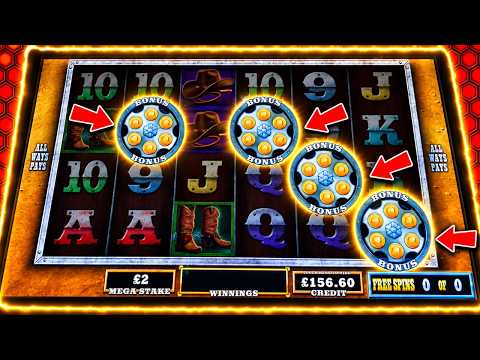
The Gambling Act 2005 defines a casino as an arrangement whereby people are given an opportunity to participate in one or more casino games. The white paper set out the government’s plans for modernising the regulation of the gambling sector.
Some lotteries including large society lotteries and licensing authority lotteries are licensed by the Gambling Commission, while small society lotteries must register with a licensing authority. Some respondents pointed to the relatively high test purchasing scores for licensed gambling premises compared to those for the sale of other age-restricted products. There was limited evidence to suggest these measures would materially improve on the current rules, which allow operators to verify age and identity via background checks that are effective in the vast majority of cases and are minimally disruptive to the customer. Bacta argued that further restrictions on children’s access to Category D machines was unnecessary, drawing attention to its voluntarily imposed 18+ age limit for playing Category D cash payout slot machines and measures in its charter that limit access and appeal to children. Evidence came from a wide range of respondents including industry, charities, researchers, campaign groups, Parliamentarians and local authorities. One of the few longitudinal studies of gambling behaviours in the UK found that patterns of problem/moderate risk gambling can often be established by 20 years of age.

While the history of the voluntary funding system and the existence of the levy power mean research, education and treatment for gambling are often considered together, the issues are in fact often distinct. One operator suggested that while they did not support a mandatory levy, there would be merit in improving the transparency of contributions made by operators. This has led to a significant increase in the money available in the voluntary system, with some other operators also increasing contributions. In July 2019, following meetings with the then DCMS Secretary of State, five major operators (now four due to mergers) committed to increase their annual contributions from 0.1% to 1%, in incremental steps over a four-year period. GambleAware historically asked operators to give 0.1% of their Gross Gambling Yield to provide an income of c.£9-10 million. Ultimately, it will provide the resources the Commission needs to regulate the industry efficiently and effectively.
With increased resources in due course, the Commission plans to invest in its data systems in order to better understand consumer behaviour and operator compliance. It is supported by existing powers in the Gambling Act for the Commission to make data requests as part of its regulatory activities. It has indicated, including in a speech by its Chief Executive to the GambleAware conference in 2021, that repeated failings are an aggravating factor and tougher action will be taken against repeat offenders.
On society lotteries, industry, campaigners and retailers all supported increasing the statutory minimum age to 18 years. Summaries of evidence and views from different groups are outlined below, but where evidence is pertinent to particular policy proposals it is discussed in more detail in the following sections. In 2022, the Gambling Commission’s Young People and Gambling Survey identified that 74% of young people who have ever spent their own money on gambling were with their parents and/or guardians at the time and 78% say they did so for fun. A recent Gambling Commission survey indicated that problem gambling rates among young adults appear to peak at the ages of 20 to 21.
Since online casino, poker, and sports betting became a popular industry in the UK, the country’s lawmakers have relied on external licensing bodies to regulate sites serving British residents. Although the United Kingdom is home to the world’s best legal online casinos, poker rooms, and sports betting sites, the industry isn’t content to stand still. There are multiple categories for gaming machines based on the maximum prize available.
Is playing online casino games legal in the United Kingdom? We are experts in various games, including online slots, blackjack, and roulette. Discover a wide range of games, the most popular slots, and slot machines with the highest RTP. Whether you’re after a trusted UK casino site for slots and live games, or looking for a great land-based casino near you, we’ve got you covered. Looking for the best casino in the UK — online or on the high street?
The call for evidence asked whether there was evidence that government should moderately increase the threshold at which local authorities need to individually authorise the number of Category C and D gaming machines in alcohol licensed premises. Licensing authorities questioned whether the ratio approach to gaming machines is still an effective means of preventing harm in licensed bingo premises and adult gaming centres. The bingo industry also pointed to Gamcare helpline statistics which show that under 1% of the calls are from customers playing bingo or gaming machines in a retail bingo club.

This entitlement will not be restricted by any space requirements or whether the casino has decided to increase its number of gaming machines under the new regime. Moreover, this measure would bring greater consistency to the different licensing regimes and bring greater parity between the online and land-based casinos. We do not currently have sufficient data to estimate the likely uptake of additional machines by casinos. Finally player protections are in place in casinos to mitigate increased risks of gambling harms. We can also analyse average loss and session length data to consider the possible risks of gambling harm for those customers who increase their gambling participation as a result of these measures.
Statutory gambling operator levy
However, some betting shop operators were aligned with the non-industry responses and believed that the session time and net position should be displayed at all times. We propose that Category D machines are not required to display safer gambling messaging beyond the current requirements placed on these machines. The government proposes that the existing safer gambling messaging is used on machines that accept cashless payments. Some industry responses also argued that members of staff in casinos already monitor players and interact where appropriate.
There are numerous charitable lottery operators that operate under certain regulatory constraints. On 1 February 2024, the Gambling Commission granted Allwyn Entertainment Ltd a 10-year licence to operate the National Lottery, replacing the previous licensee Camelot. Casinos in the UK are generally operated under historic licences that were rolled forward under the “new” Gambling Act 2005. In addition to the LCCP, the British regulator also publishes a large body of literature comprising regulatory advice, policies and guidance which licensees are expected to take account of.The financial regulation of gambling is set out mostly in the British Finance Acts and provides for various levels of duty upon different types of gambling.
While this is certainly a reasonable belief to hold, the Financial Conduct Authority is responsible for spread betting. Many British bettors incorrectly assume that spread betting is regulated by the UK Gambling Commission. All gambling business must use an approved alternate dispute resolution body to handle non gamestop casino unresolved player complaints. The Commission offers guides on gambling safety, consumer rights, and other pertinent topics.
These rates are lower than the majority of other gambling products, although remain above the at-risk and problem gambling rates for ‘any gambling activity’. We would like to understand whether these types of protections are already available on these machines, or whether it would require investment in new machines or software. Therefore, this option would need to be accompanied by a requirement that Category B3 machines in these venues would have certain player safety controls, such as staff alerts where a player meets spend or time limits. For example, as previously highlighted, evidence provided by Bacta shows that the average stake placed on a Category B3 game is between £1.20 – £1.30, compared to 40p – 60p for a Category C machine.
In stadiums used for professional-level competition, gambling advertising should not be visible in or from dedicated family areas. Kits without sponsor logos to be ensured for athletes aged under 18 or adults who have religious or health reasons to object to wearing gambling sponsors; and replica kits without logos to be available in adult sizes. Governing bodies across many sports already rightly have rules in place governing relationships with gambling companies for the purpose of maintaining integrity, and in future there should also be rules in place to guarantee social responsibility. The measures included in a sponsorship Code need to be robust enough to provide meaningful improvements in the social responsibility of gambling sponsorships, while giving flexibility to accommodate the material differences between sports. We welcome the work that is underway through sports governing bodies to develop a gambling sponsorship Code of Conduct, and will continue to support its development and implementation across the whole sporting sector. For individual sports we believe that sports governing bodies are best placed to drive up standards in gambling sponsorship, recognising their specific context and responsibility to their fans.
We have not assumed that offering credit facilities will increase GGY, although it is possible that such a policy will make casinos that serve this type of customer more internationally attractive and help boost GGY above pre-pandemic levels. Typical exchange fees of 0.5% to1% (if negotiated in bulk on large transfers by the casino) would mean the cost of exchange would represent 12% to 25% on top of GGY, and provide a substantial disincentive to gamble in these casinos as opposed to in other jurisdictions. At high-end casinos, there is a relatively low house retention, so typically, a large proportion of stakes return to the gambler as winnings.
The introduction of CIAs may also further increase the cost to licensing authorities of discharging their statutory functions. In addition, we would like to encourage licensing authorities to make more use of their powers in relation to e.g. analysis and enforcement, which will result in increased costs. When Parliamentary time allows, we will also make some small changes to the 2005 Act to ensure that certain powers apply to authorities and/or licensing officers in Scotland as they do in England and Wales. The introduction of CIAs will require primary legislation and in advance of their introduction, we strongly encourage licensing authorities to make full use of their existing powers. We envisage that CIAs will be introduced using the same approach as applied in the Licensing Act 2003, for alcohol licensing. This should be more bespoke than a risk assessment and centre on particular details identified by the CIA.
Gaining access to gambling from 18 years of age also coincides with an important developmental and social period in many adolescents’ lives, typically characterised by new freedoms and responsibilities, such as starting university, getting a job, living independently, and/or managing money for the first time. There is data to show that 27% of gamblers aged between 16 and 25 report friends encouraging them to gamble more money/more often. Further, some call for evidence respondents cited neurological research showing cognitive development continuing up to the age of 25 and argued that protective measures should reflect the fact that young adults may still be developing capacity to regulate impulses and make more rational decisions. However, there is growing evidence that younger adults may benefit from greater protection than other groups.